Joyeux anniversaire à l’UNESCO: 80 ans !
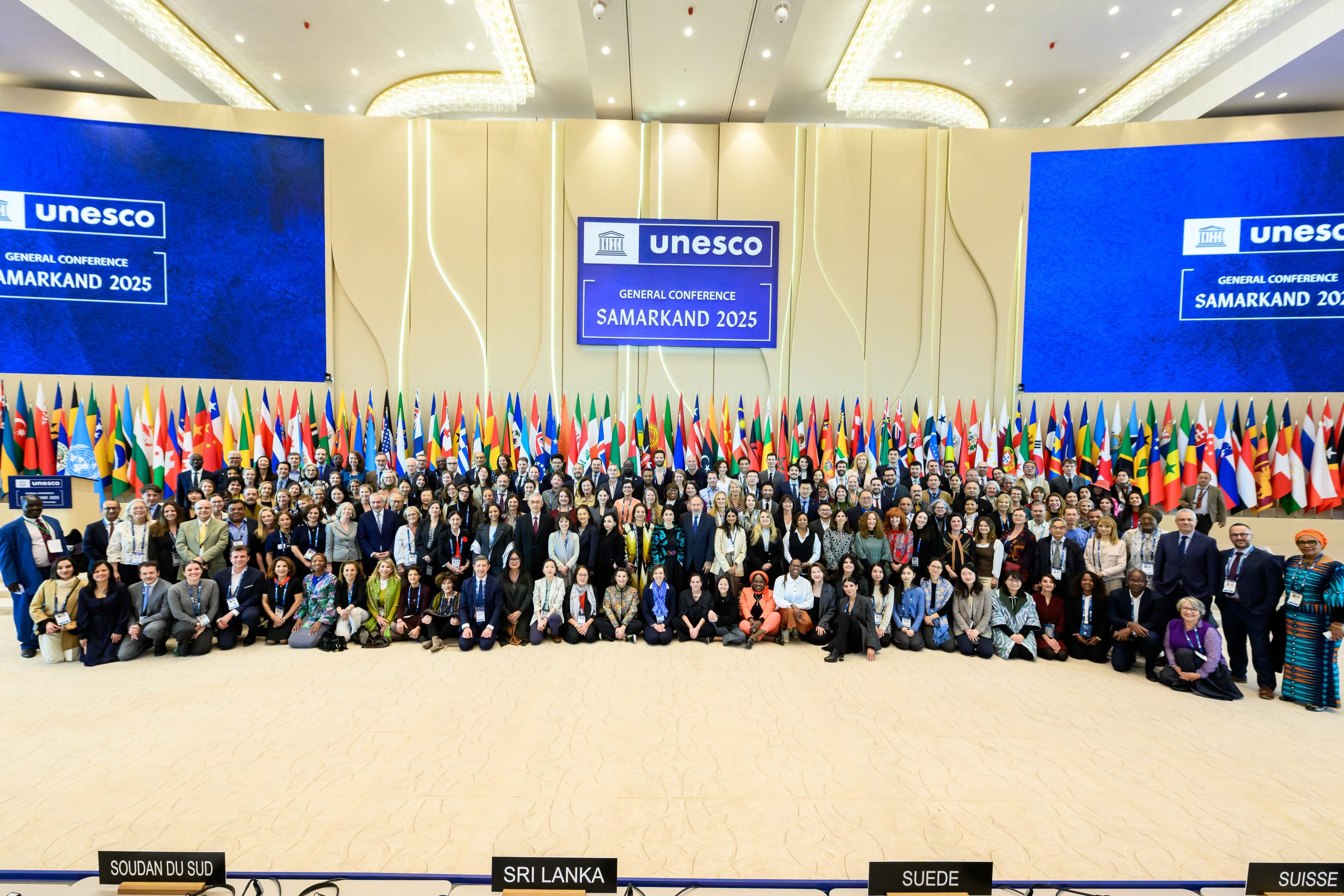
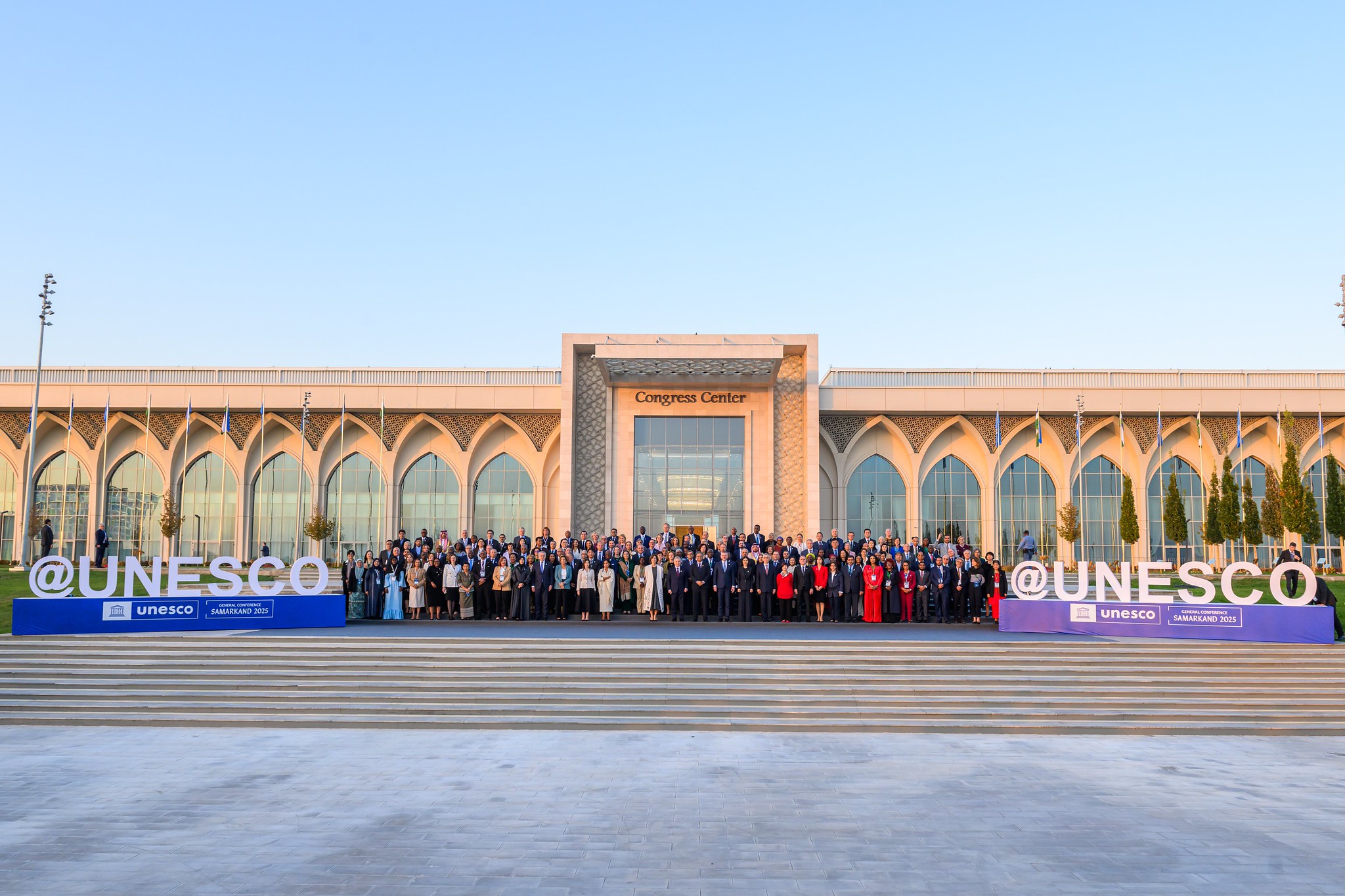
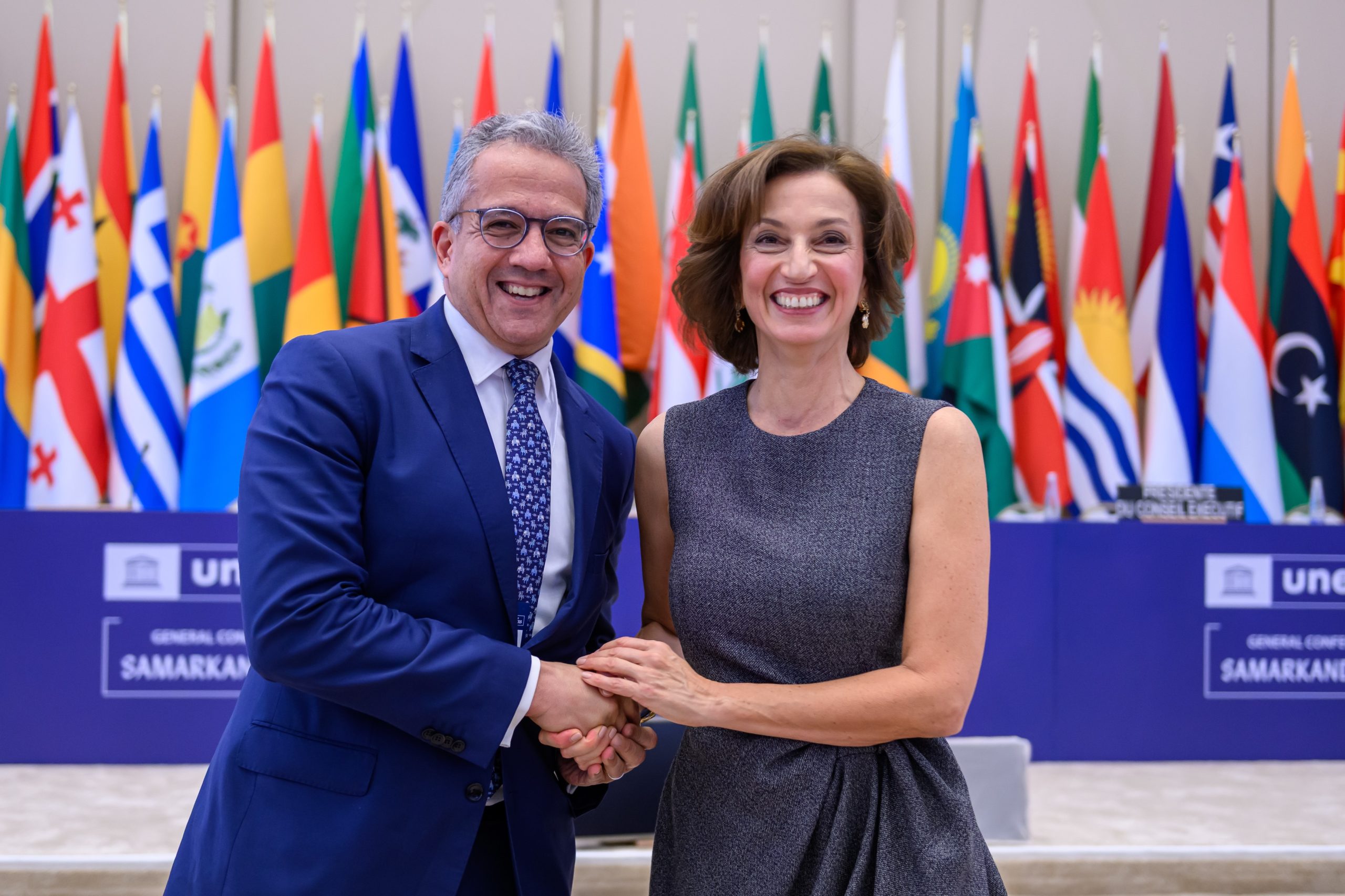
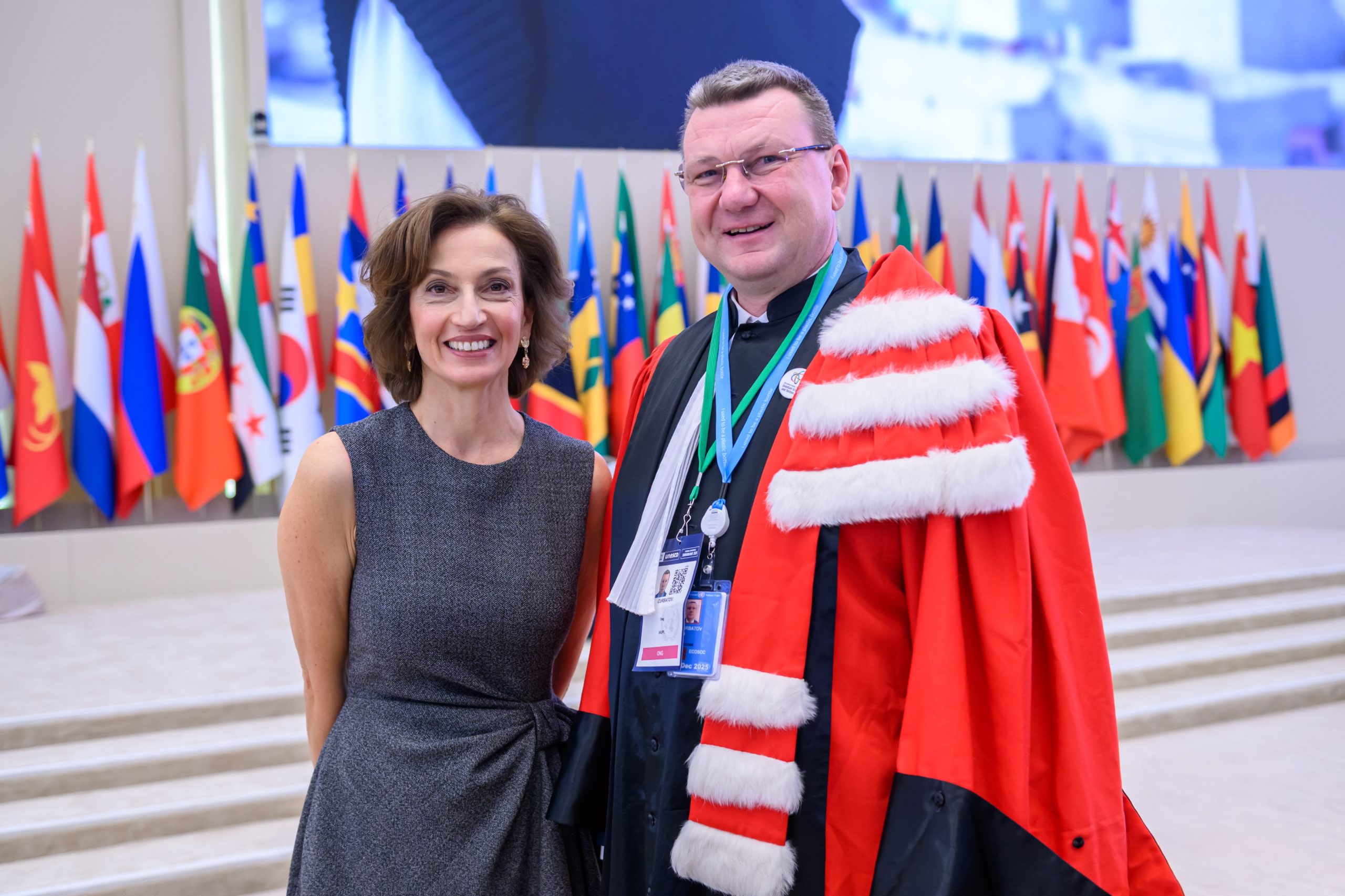
Aujourd’hui, nous célébrons le 80ᵉ anniversaire de UNESCO !
Le 16 novembre 1945, les États membres se sont unis pour fonder cette organisation dédiée à la science, l’éducation et la culture au service de la Paix.
IAUPL est fière de contribuer depuis huit décennies aux travaux de l’UNESCO. Notre père-fondateur, le Professeur René Cassin, créateur de l’IAUPL en 1944 à Londres, fut également l’un des artisans des premiers travaux de l’UNESCO en 1945, ainsi que des réflexions menées à l’ECOSOC aux Nations Unies concernant la future Déclaration universelle des Droits de l’Homme en1948.
Les universitaires apportent souvent des contributions discrètes mais essentielles: atypiques, visionnaires, elles nourrissent le progrès social, diplomatique académique et scientifique.
En ce jour symbolique, nous célébrons également l’anniversaire du Secrétariat de l’UNESCO. Nous rendons hommage:
– à l’ensemble du personnel de l’Organisation de l’UNESCO;
– à Madame Audrey Azoulay, Directrice Générale sortante après huit années de mandat ;
– et adressons nos félicitations au Professeur Khaled El-Enany Ezz, nouveau Directeur Général élu.
Les informations et images partagées sur www.unesco.org illustrent la diversité, le professionnalisme et l’engagement des équipes qui font vivre l’UNESCO. Elles témoignent bien que cette grande Organisation poursuit sa mission « entre de bonnes mains ».
© image UNESCO / Husniddin Ato / Firuz Tashpulatov
(Observateur) IAUPL à la Commission SHS – 43-ème Conférence Générale de l’UNESCO
Mr. Chairperson of the Social and Human Sciences Commission UNESCO,
Distinguished Delegates, dear University Colleagues,
Academic and scientific freedoms remain the foundation of any society built upon freedom of thought and human dignity.
To safeguard today the status of researchers in the face of new challenges is to “unite knowledge with peace”, by placing fundamental rights and academic diplomacy at the heart of the actions of university scientists.
That is why the International Association of University Professors and Lecturers (IAUPL) – which has maintained relations with UNESCO and the United Nations for 80 years – reiterates today its full support for UNESCO’s “Recommendation on Science and Scientific Researchers.”
In connection with the previous agenda item, IAUPL has presented its observations to various agencies of the United Nations system — in Geneva (ITU, UNCTAD) and in New York (STI Forum – ECOSOC) — regarding academic and scientific freedom, with a view to designing a possible Convergent Technological Pact for Quantum, AI and Neurotechnological fields, or any other interoperable Treaty that Member States may deem appropriate, so that science and the voice of scholars may serve peace rather than war.
Thank you for your attention.
(FR, original):
Monsieur le Président de la Commission des Sciences Humaines et Sociales de l’UNESCO
Mesdames et Messieurs les Délégués, chers Collègues universitaires,
Les libertés académiques et scientifiques demeurent le socle de toute société fondée sur la liberté de pensée et la dignité humaine.
Sauvegarder aujourd’hui le statut de chercheur face aux nouveaux défis, c’est « unir le savoir à la paix », en plaçant les droits fondamentaux et la diplomatie académique au cœur des actions des scientifiques universitaires.
C’est pourquoi qui l’IAUPL qui entretient les relations avec l’UNESCO et l’ONU depuis 80 ans, réitère aujourd’hui son soutien à l’UNESCO pour la « Recommandation concernant la science et les chercheurs scientifiques ».
Pour faire un lien avec le point précèdent, l’IAUPL a porté ses observations auprès de diverses agences du système des Nations Unies à Genève à l’ITU, à la CNUCED, au Forum STI à New-York concernant la liberté scientifique et académique en vue de la conception d’un éventuel Pacte convergent des technologies Quantiques – IA – Neuro-technologie, ou de tout autre Traité interprétable que les États membres jugeront approprié, pour que les sciences et la parole des universitaires – scientifiques servent pour la paix et non la guerre.
Je vous remercie de votre attention.
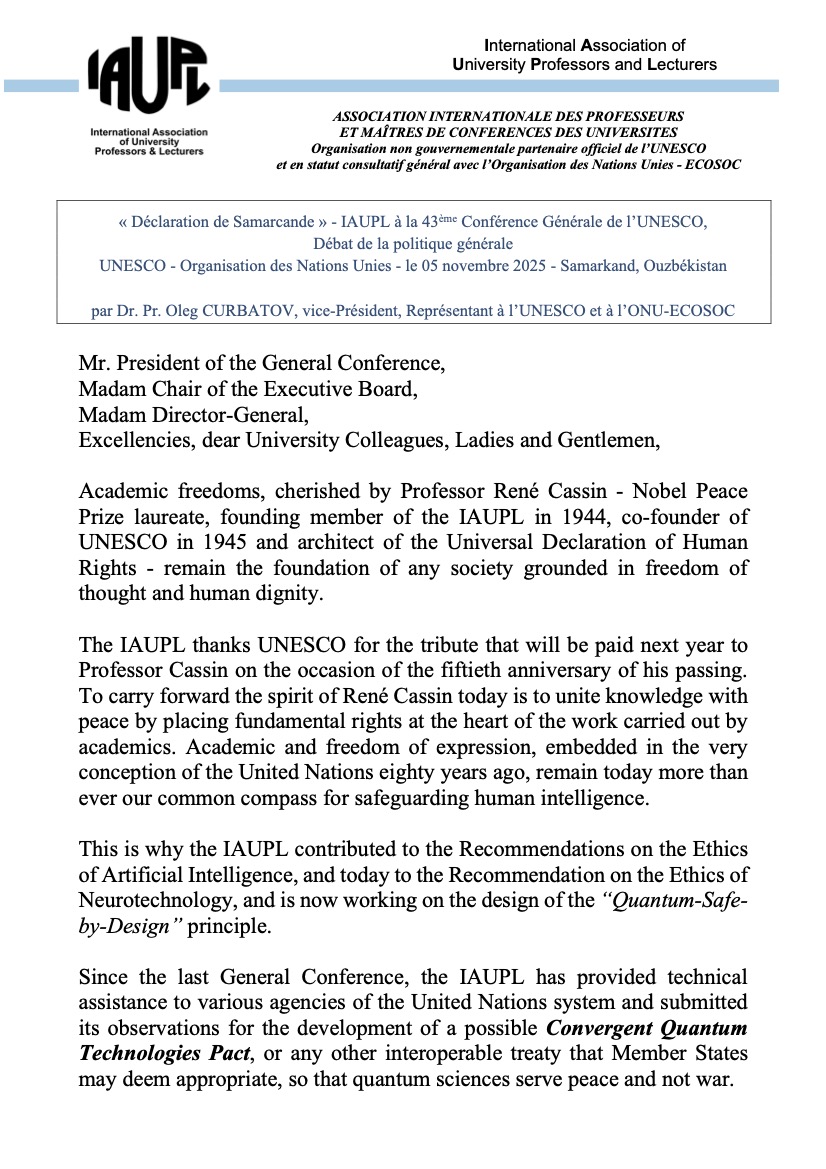
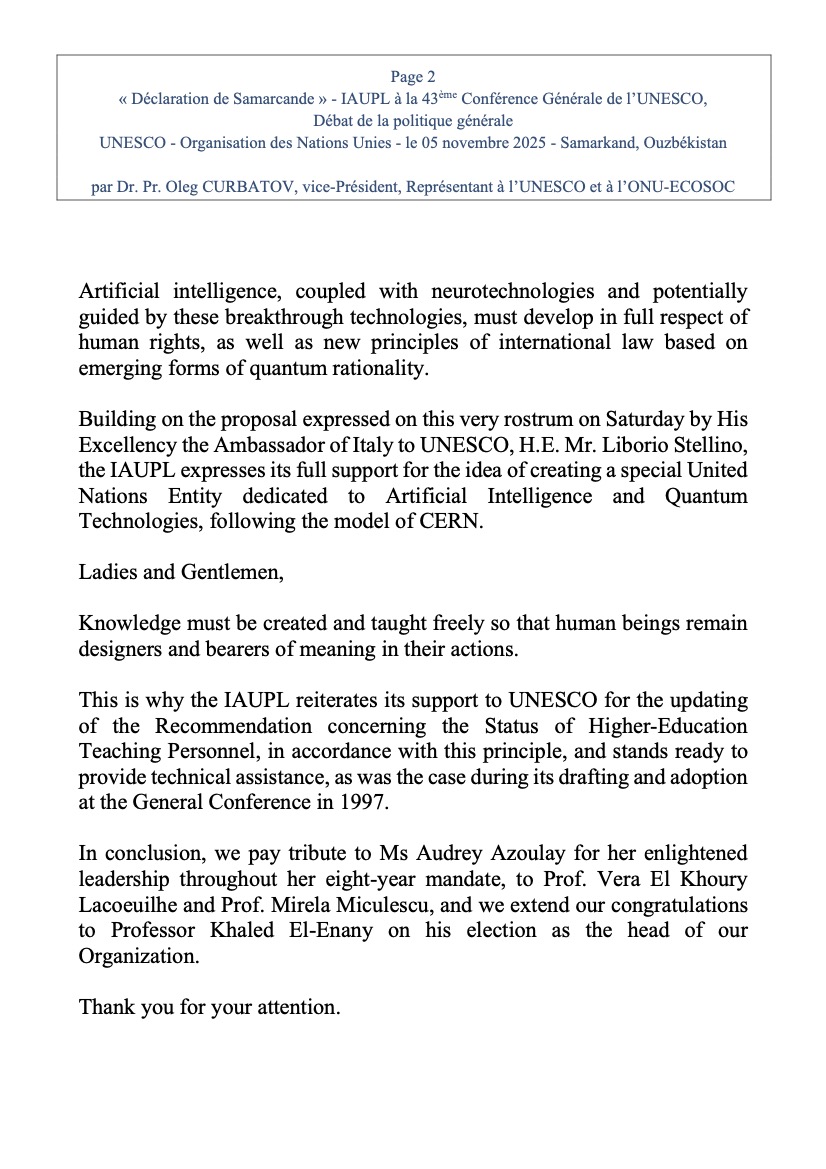
« Déclaration de Samarcande IAUPL » – Débats de la Politique Générale – 43ème Conférence Générale de l’UNESCO
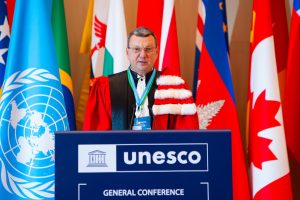
(site de l’UNESCO de la 43ème Conférence Générale ici)
Excellencies, Distinguished University Colleagues, Ladies and Gentlemen,
International Association of University Professors and Lecturers (IAUPL) expresses its deepest gratitude to the Republic of Uzbekistan for its warm welcome and for hosting this General Conference.
We pay tribute to Ms. Audrey Azoulay for her enlightened leadership throughout her eight years in office, and we extend our congratulations to Professor Khaled El-Enany on his election as the new head of our Organization.
Ladies and Gentlemen,
Academic freedoms, so dear to Professor René Cassin, Nobel Peace Prize laureate, founding member of the IAUPL in 1944, co-founder of UNESCO in 1945, and architect of the Universal Declaration of Human Rights – remain the cornerstone of every society founded on freedom of thought and human dignity.
The IAUPL thanks UNESCO for the tribute that will be paid next year to Professor Cassin on the fiftieth anniversary of his passing.
To continue the spirit of René Cassin today means to unite knowledge with peace, by placing fundamental rights at the very heart of the mission of academics.
Academic and expressive freedom, enshrined in the very conception of the United Nations eighty years ago, remains today more than ever our common compass for safeguarding human intelligence.
This is why the IAUPL has contributed to the Recommendations on the Ethics of Artificial Intelligence, and now on the Ethics of Neurotechnologies, and is currently working on the development of the “Quantum-Safe-by-Design” principle.
Since the last General Conference, the IAUPL has presented its observations to the United Nations system agencies regarding the design of a possible Convergent Technological Pact for Quantum Technologies, or any other interoperable treaty that Member States may deem appropriate, so that quantum sciences may serve peace.
Artificial intelligence, coupled with neurotechnologies and potentially guided by these disruptive technologies, must evolve in full respect of human rights and in accordance with emerging principles of international law based on new forms of « quantum rationality ».
Following the proposal made last Saturday by His Excellency Mr. Liborio Stellino, Ambassador of Italy to UNESCO, the IAUPL expresses its full support for the idea of creating a special United Nations entity dedicated to Artificial Intelligence and Quantum Technologies, modeled on CERN.
Ladies and Gentlemen,
Knowledge must be created and taught freely so that the human being may remain both the designer and the bearer of meaning in their actions.
For this reason, the IAUPL reiterates its support to UNESCO for the revision of the Recommendation concerning the Status of Higher-Education Teaching Personnel, in accordance with this principle, and stands ready to provide technical assistance, as it did during its drafting and adoption at the 1997 General Conference.
Thank you for your attention.
(FR: texte original):
Excellences, chers Collègues universitaires, Mesdames et Messieurs,
L’Association Internationale des Professeurs et Maîtres de Conférences des Universités (IAUPL) exprime sa profonde gratitude à la République d’Ouzbékistan pour son accueil chaleureux et pour l’organisation de cette Conférence Générale.
Nous rendons hommage à Madame Audrey Azoulay pour son leadership éclairé tout au long de ses huit années de mandat, et adressons nos félicitations au Professeur Khaled El-Enany pour son élection à la tête de notre Organisation.
Mesdames, Messieurs,
Les libertés académiques, chères au Professeur René Cassin, Prix Nobel de la Paix – membre fondateur de l’IAUPL en 1944, co-fondateur de l’UNESCO en 1945 et artisan de la Déclaration universelle des Droits de l’Homme – demeurent le socle de toute société fondée sur la liberté de pensée et la dignité humaine.
L’IAUPL remercie l’UNESCO pour l’hommage qui sera rendu au Professeur Cassin, l’année prochaine, à l’occasion du cinquantième anniversaire de sa disparition.
Prolonger l’esprit de René Cassin aujourd’hui, c’est unir le savoir à la paix, en plaçant les droits fondamentaux au cœur des actions des universitaires.
La liberté académique et d’expression, inscrite dans la conception même des Nations Unies il y a quatre-vingts ans, demeure aujourd’hui plus que jamais notre boussole commune pour la sauvegarde de l’intelligence humaine.
C’est pourquoi l’IAUPL a contribué aux Recommandations sur l’Éthique de l’Intelligence Artificielle, aujourd’hui, sur l’Éthique des Neurotechnologies, et œuvre désormais à la conception du principe “Quantum-Safe-by-Design”.
Depuis la dernière Conférence Générale, l’IAUPL a porté ses observations auprès des agences du système des Nations Unies pour la conception d’un éventuel Pacte convergent des technologies quantiques, ou de tout autre Traité interopérable que les États membres jugeront approprié, pour que les sciences quantiques servent la paix.
L’intelligence artificielle, couplée aux neurotechnologies et potentiellement guidée par ces technologies de rupture, doit se développer dans le plein respect des droits de l’homme, ainsi que de nouveaux principes de droit international fondés sur les formes émergentes de « rationalité quantique ».
Dans le prolongement de la proposition exprimée samedi par Son Excellence l’Ambassadeur d’Italie auprès de l’UNESCO, M. Liborio Stellino, l’IAUPL exprime son plein soutien à l’idée de créer une Entité spéciale des Nations Unies dédiée à l’Intelligence Artificielle et aux Technologies Quantiques, sur le modèle du CERN.
Mesdames, Messieurs,
Les connaissances doivent être créées et enseignées librement, afin de rendre l’humain concepteur et porteur de sens dans ses actions.
C’est pourquoi l’IAUPL réitère son soutien à l’UNESCO pour l’actualisation de la Recommandation concernant la condition du personnel enseignant de l’enseignement supérieur, conformément à ce principe, et se tient prête à apporter une assistance technique, comme ce fut le cas lors de sa conception et de son adoption à la Conférence Générale en 1997.
Je vous remercie de votre attention.
Liste complète des Discours (site officiel de l’UNESCO) sont ici
IAUPL at the 43rd UNESCO General Conference – Meeting on the Global Convention on the Recognition of Higher Education Qualifications
 The IAUPL participated in this meeting alongside the Minister of Higher Education of Uzbekistan M. Dr. SHAPIROV Kongratbay – reaffirming our shared commitment to promoting academic mobility, mutual recognition of qualifications, and « Academic freedom » in higher education policies within the framework of UNESCO’s Global Convention on the Recognition of Higher Education Qualifications.
L’IAUPL a participé à la réunion spéciale de la 43C aux côtés du Ministre de l’Enseignement supérieur de la République d’Ouzbékistan Dr. Shapirov Kongratbay, réaffirmant un engagement commun en faveur de la mobilité académique, de la reconnaissance mutuelle des qualifications et du développement d’un enseignement supérieur inclusif, dans le cadre de la Convention mondiale de l’UNESCO sur la reconnaissance des qualifications relatives à l’enseignement supérieur.
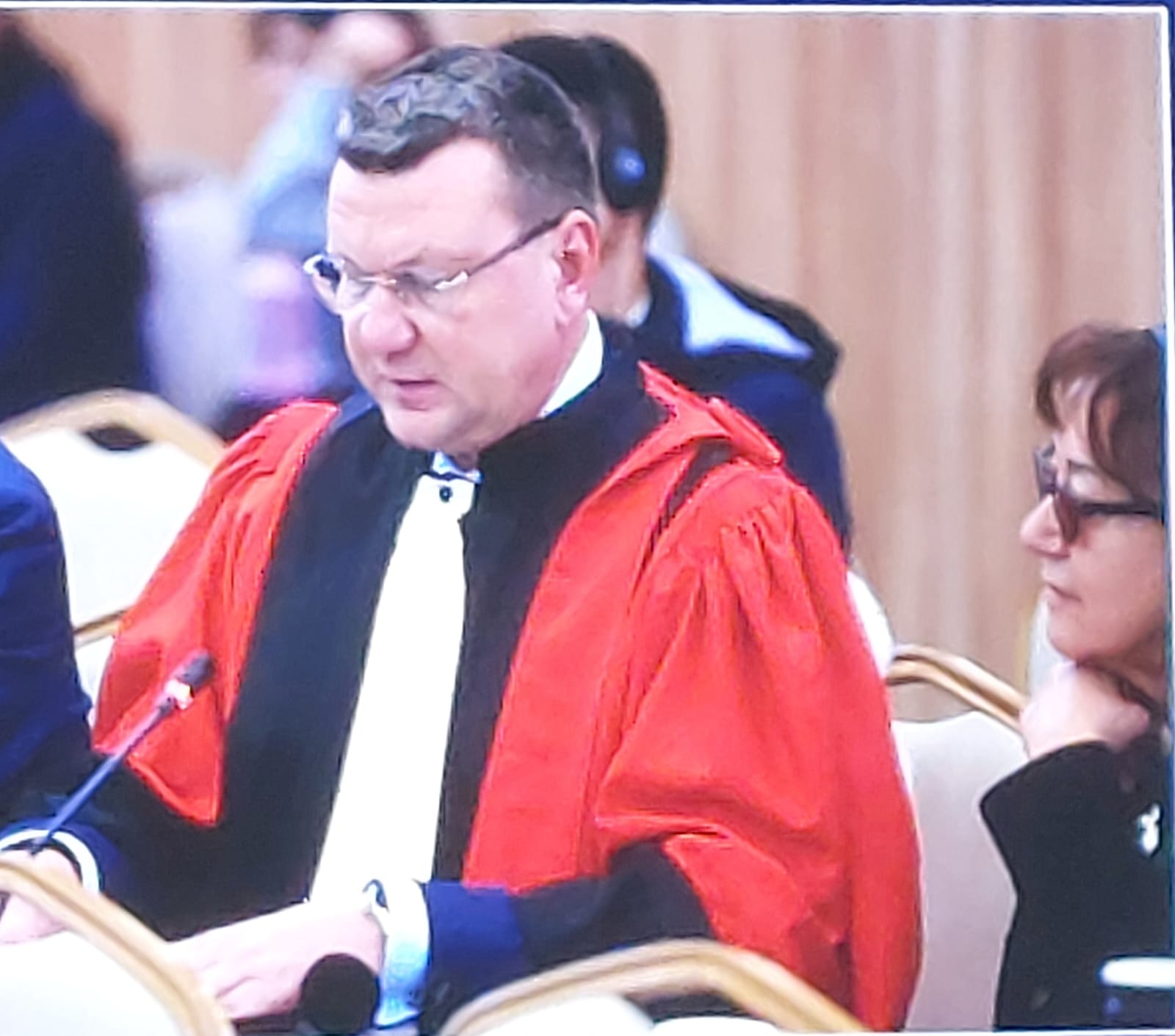
(IAUPL Observateur) – Commission Education – 43eme Conférence Générale de l’UNESCO – Recommandation concernant la condition enseignant de l’enseignement supérieur (point 43C/31)
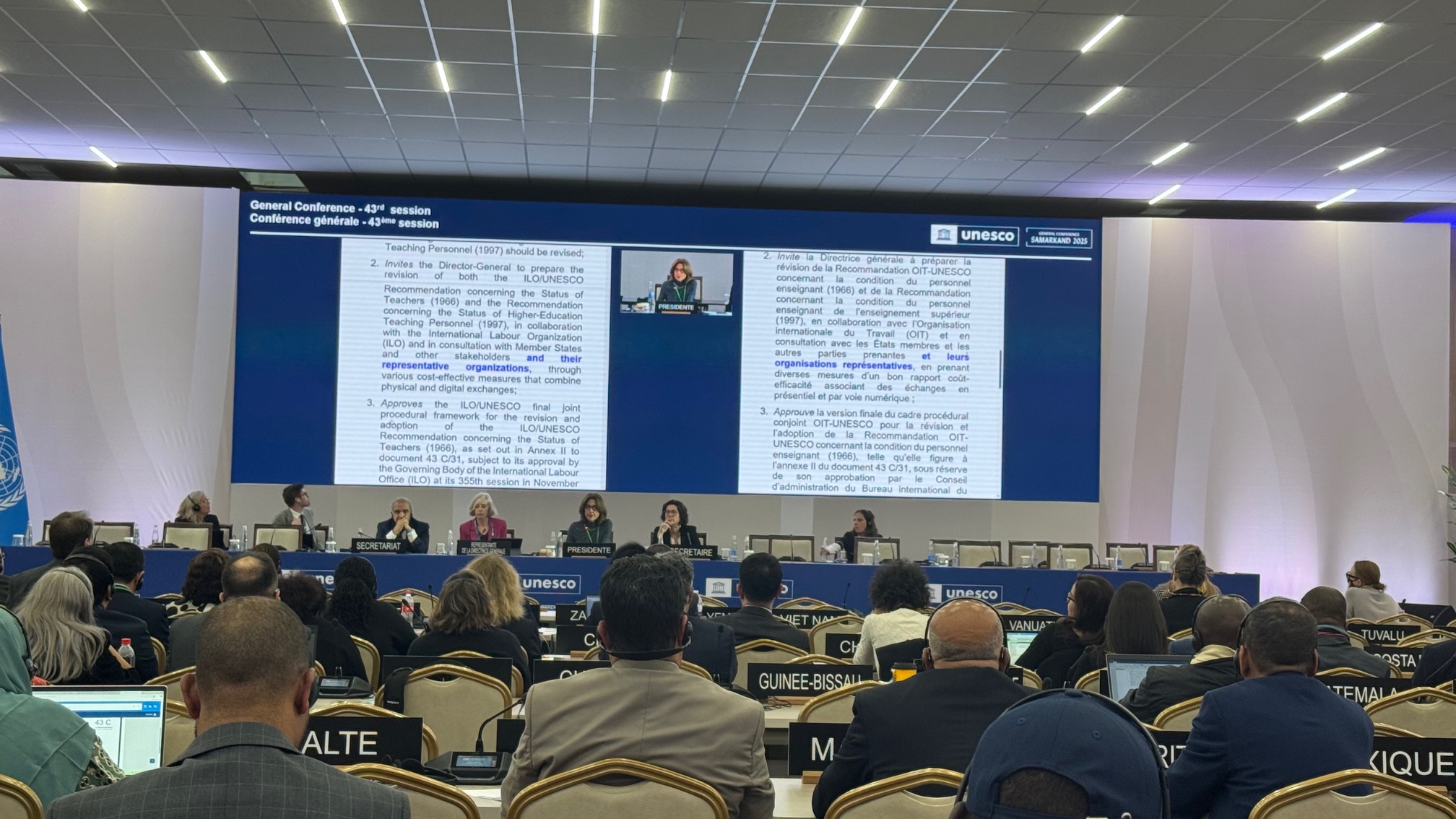
Madam Chair of the Education Commission,
Madam Assistant Director-General,
Distinguished Delegates, dear Academic Colleagues,
Academic freedom remains the cornerstone of every society founded on freedom of thought and human dignity.
Freedom of expression, enshrined in the very conception of the United Nations eighty years ago, remains today more than ever our shared compass for the future of generations to come – through education and research in the era of emerging technologies.
To safeguard the status of teachers today, in the face of new challenges, is to “unite knowledge with peace,” by placing fundamental rights and academic diplomacy at the heart of the actions of the academic community.
This is why the IAUPL, which has maintained relations with the United Nations and UNESCO for eighty years, reiterates today its support for UNESCO in the updating of the Recommendation, in accordance with this Declaration.
The IAUPL stands ready once again to provide technical assistance, as it did in accordance with DR 27 C/44 adopted by the General Conference in 1993.
Thank you for your attention.
(FR):
Madame la Présidente de la Commission Éducation, Madame l’ADG, Mesdames et Messieurs, chers Collègues universitaires,
Les libertés académiques demeurent le socle de toute société fondée sur la liberté de pensée et la dignité humaine.
La liberté d’expression, inscrite dans la conception même des Nations Unies il y a quatre-vingts ans, demeure aussi aujourd’hui plus que jamais notre boussole commune pour l’avenir des générations futures, par l’enseignement et par la recherche dans l’ère des technologies émergentes.
Sauvegarder aujourd’hui le statut enseignant face aux nouveaux défis, c’est « unir le savoir à la paix », en plaçant les droits fondamentaux et la diplomatie académique au cœur des actions des universitaires.
C’est pourquoi l’IAUPL qui entretient les relations avec l’ONU et l’Unesco depuis 80 ans, réitère aujourd’hui son soutien à l’UNESCO pour l’actualisation de la Recommandation, conformément à cette Déclaration.
L’IAUPL se tient prête à apporter à nouveau une assistance technique, comme ce fut le cas, conformément à la DR 27C/44 adoptée à la Conférence Générale en 1993.
Je vous remercie de votre attention.
Commentaires récents